Concrete Repair Problems
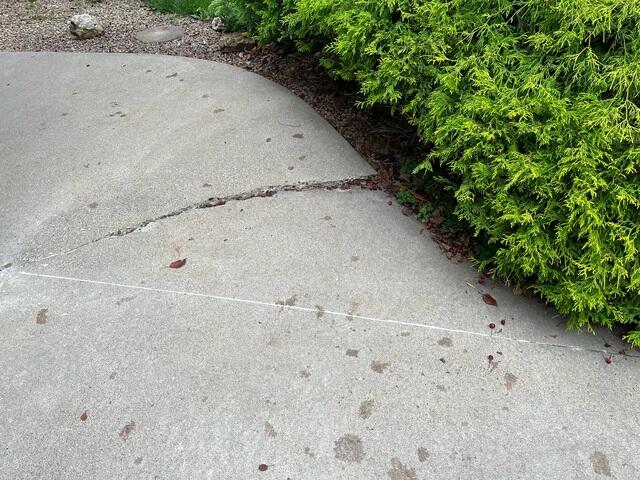
Concrete Damage Signs Homeowners Should Not Ignore
Concrete damage signs can start small, but they often point to bigger problems beneath the surface. Cracks, sinking slabs, uneven walkways, pitting, flaking, and pooling water are all warning signs that your concrete may be losing support or breaking down from moisture, soil movement, and freeze-thaw cycles. DBS Repair helps homeowners in Minnesota and Wisconsin understand what is causing the damage and choose the right repair solution before the problem gets worse.
Cracked Driveway or Sidewalk
What it is
Cracked concrete often happens when part of a slab breaks and sinks into soil that has compressed or washed away. These are common concrete damage signs that can get worse over time, especially when cracks give rain and snowmelt a direct path beneath the slab. As moisture softens or erodes the remaining soil, the slab continues to sink into the growing void and the cracks keep spreading.
What causes it
- Poorly compacted soil: when a home is built, the soil moved around the site is never as stable as undisturbed soil. Over time it compresses, voids form, and slabs settle and crack.
- Dry soil: during drought or long stretches of warm, dry weather, the soil under the concrete shrinks and creates empty space. The slab above cracks and sinks into it, especially under weight.
- Flooding and erosion: when the rain returns, water travels through the cracks left by the dry period. Wet, soft soil cannot support the slab, and in the worst cases it washes away entirely.
- Heavy loads: a vehicle, trailer, or RV parked in the same spot accelerates settlement and cracking over time.
- Freeze-thaw cycles: trapped moisture expands as it turns to ice, stressing and weakening the slab from within. This is especially aggressive in the Upper Midwest climate.
How to identify it
- Cracks that widen, lengthen, or multiply from season to season
- One side of a crack sitting lower than the other (a sign of settlement, not just surface shrinkage)
- Water pooling along cracks or slab edges after rain
- Weeds growing up through cracks and joints
- Cracks appearing near the garage entrance or where the driveway meets the street
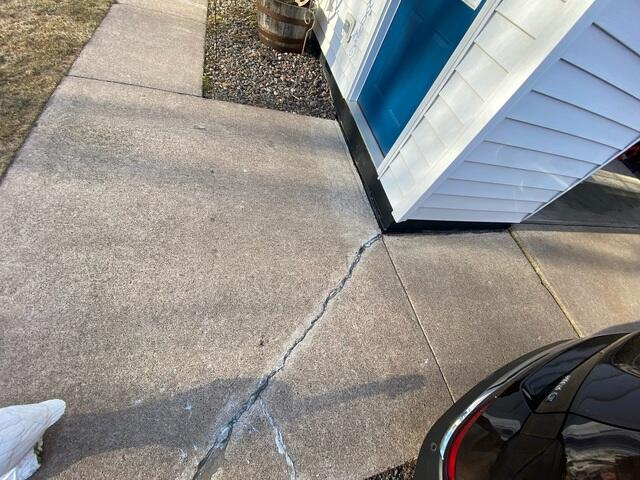
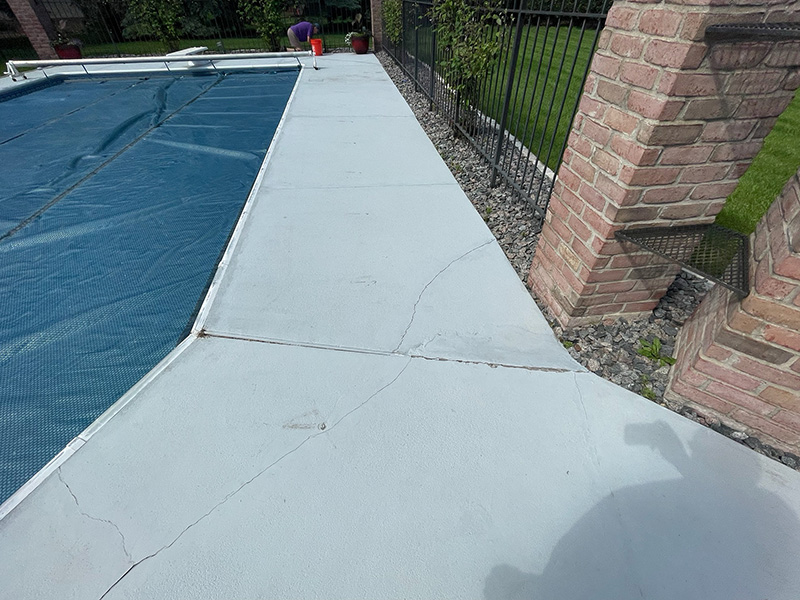
Cracked or Spalling Pool Deck
What it is
Pool decks often develop two common concrete damage signs that can appear at the same time. Settlement occurs when sections of the deck sink or shift, creating uneven surfaces, trip hazards, and raised edges in areas where people frequently walk barefoot. Spalling is a different type of damage that affects the surface itself. As the top layer of concrete begins to flake, pit, or break away, the deck can become rough, discolored, and more vulnerable to stains and moisture-related deterioration.
What causes it
- Loose backfill from pool construction: the soil placed back around a pool excavation is never as dense or well compacted as the undisturbed soil around it. When a heavy concrete deck is poured on top, that loose soil compresses under the weight and sections of the slab sink.
- Constant moisture exposure: pool decks live with splash-out, runoff, and humidity. Moisture is concrete’s strongest enemy: it seeps into the pores of the untreated surface.
- Freeze-thaw damage: in winter, trapped moisture expands as it freezes, destroying the pores near the surface. This is what produces pitting and flaking (spalling).
- Untreated, porous concrete: the same porosity that lets water in also makes the deck susceptible to staining and discoloration.
How to identify it
- A protruding edge where one section of slab has settled below another
- Sections of deck tilting toward or away from the pool
- Surface that looks pitted, flaked, or “peeled,” often in patches
- Stains and discoloration that won’t wash off
- Puddles forming on the deck after splash-out or rain
Thumbs Up forIntegrity




Concrete Joint Gaps & Separation
What it is
Control joints are the lines cut between concrete slabs when they are first poured. They are designed to help manage natural expansion and contraction as the concrete responds to temperature changes. Over time, however, these joints can widen, separate, or lose their original filler. What begins as a normal part of the slab can become one of the earliest concrete damage signs, allowing water to enter beneath the concrete and contribute to erosion, settlement, and other long-term problems.
What causes it
- Expansion and contraction cycles: slabs shrink in cold months and expand in warm ones. Each cycle works the joints wider.
- Failing joint filler: standard urethane caulks crack, bubble, and dry out, leaving the joint unprotected far sooner than expected.
- Water infiltration: open joints funnel rain and meltwater straight to the soil below, where it erodes the support under both neighboring slabs.
- Street creep: in winter, the street’s slabs contract and the open joints fill with pebbles and debris. When warm weather returns, the slabs expand against material that won’t compress. That pressure has nowhere to go except up your driveway and against your home, and it can cause all sorts of structural problems over time.
How to identify it
- Joints that look noticeably wider than they used to be
- Old caulk that is cracked, bubbled, peeling, or missing entirely
- Weeds or grass growing up through the joints
- Gaps opening between the driveway and the garage apron, or between a walkway and the foundation
- A driveway that appears pushed up against, or into, the garage slab (a classic street creep symptom)
- Soil visibly washing out of or settling around a joint after heavy rain
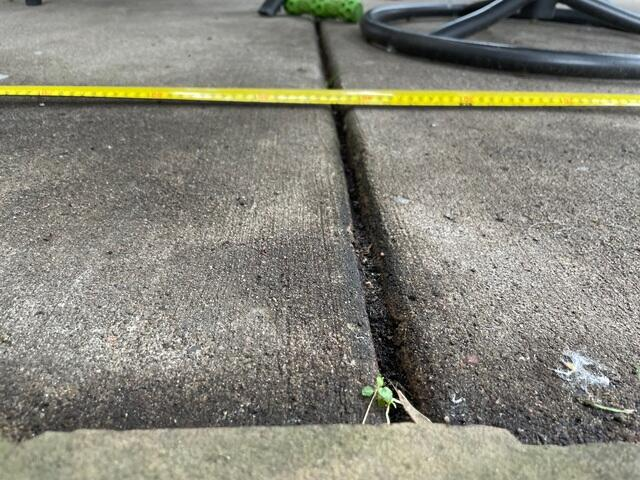
Sunken or Uneven Concrete Slabs
What it is
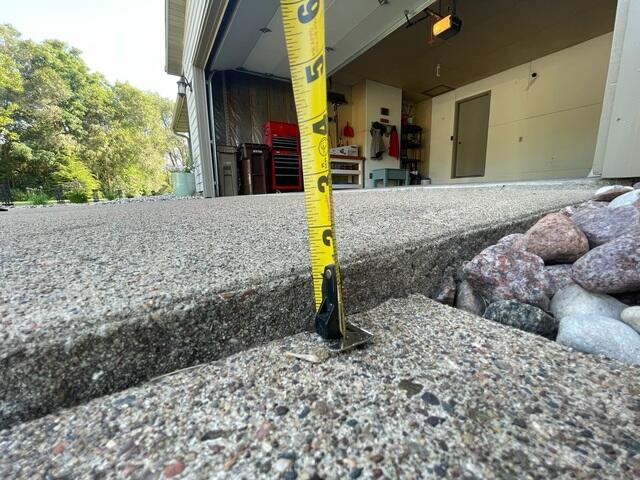
The stability of any concrete surface depends on the soil beneath it. When that soil weakens, shifts, or washes away, the slab above can lose support and begin to settle into the empty space below. These are some of the most common concrete damage signs homeowners encounter, often appearing as uneven surfaces, sinking slabs, widening gaps, or developing cracks.
This type of settlement can affect driveways, walkways, patios, steps, stoops, and other concrete surfaces around the home. In Minnesota and Wisconsin, changing soil conditions, water erosion, and freeze-thaw cycles make concrete settlement a common problem. Identifying these concrete damage signs early can help prevent further movement and reduce the need for more extensive repairs later.
What causes it
- Weak or shifting soil base: the weight of the concrete and everything it supports gradually compresses a weak soil base.
- Erosion: water washing away soil from under the slab is one of the most common causes. Clogged gutters, incorrectly installed downspouts, and poor yard drainage all make it worse.
- Poor compaction during construction: if the base under the slab was never compacted properly, settlement is built in from day one. Newer homes can show sinking slabs for exactly this reason while the ground around the house is still settling.
- Drought-shrunken soil: dry soil contracts and leaves voids that the slab eventually drops into.
- Decayed organic material: a buried tree root or stump that rots away over time leaves an empty pocket beneath the concrete.
How to identify it
- One slab sitting visibly lower than its neighbor (a stair-step effect)
- A slab tilting or sloping toward the house, which directs water at the foundation
- Water ponding in low spots after rain instead of draining off
- Visible gaps or daylight under a slab edge
- A driveway that has dropped below the garage floor entrance
- New or widening cracks accompanying the height change
Uneven Garage or Interior Slab Floor
What it is
Slab settlement doesn’t stop at the door. Garage floors and slab-on-grade interior floors can sink for the same reasons outdoor concrete does: soil movement, erosion, and loss of support beneath the slab. Inside the home, these concrete damage signs may appear as sloping floors, cracks near doorways, gaps between floors and walls, or doors that no longer close properly.
When left unaddressed, a settling interior slab can contribute to more extensive structural concerns and costly repairs. It can also affect a home’s value and marketability. Many buyers view uneven floors and visible settlement as warning signs of underlying issues, making early identification and repair an important step in protecting both the home and its long-term value.
What causes it
- Slabs poured on wet, weak, or poorly compacted soil: the most common cause. Over time the soil compresses and the slab settles with it.
- Moisture changes under the home: water intrusion or drying soil beneath the slab changes how much weight the soil can carry.
- Construction backfill around the foundation: the disturbed soil near foundation walls settles more than soil at the center of the slab, which is why dips often appear along walls and at garage entrances.
How to identify it
- Floors that feel uneven, slope to one side, or bounce a ball on their own
- Cracks or separations at doorways and where floors meet walls
- Gaps opening at the seams between flooring and baseboards
- Doors that stick, swing open, or no longer latch
- Cracked floor tiles or a visible crack running across a garage slab
- A garage floor that has dropped relative to the driveway or foundation walls
Trip Hazards on Walkways & Steps
What it is
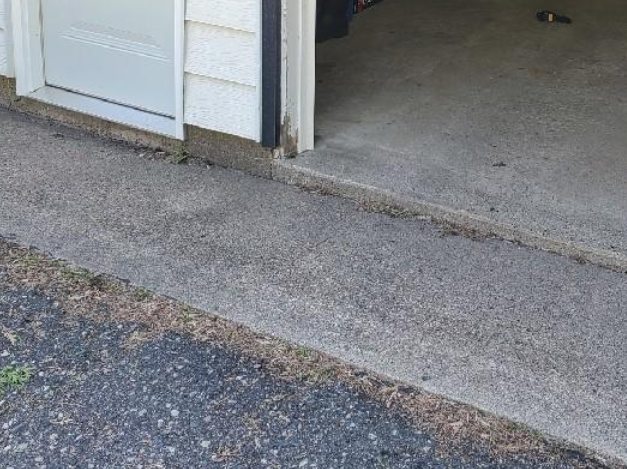
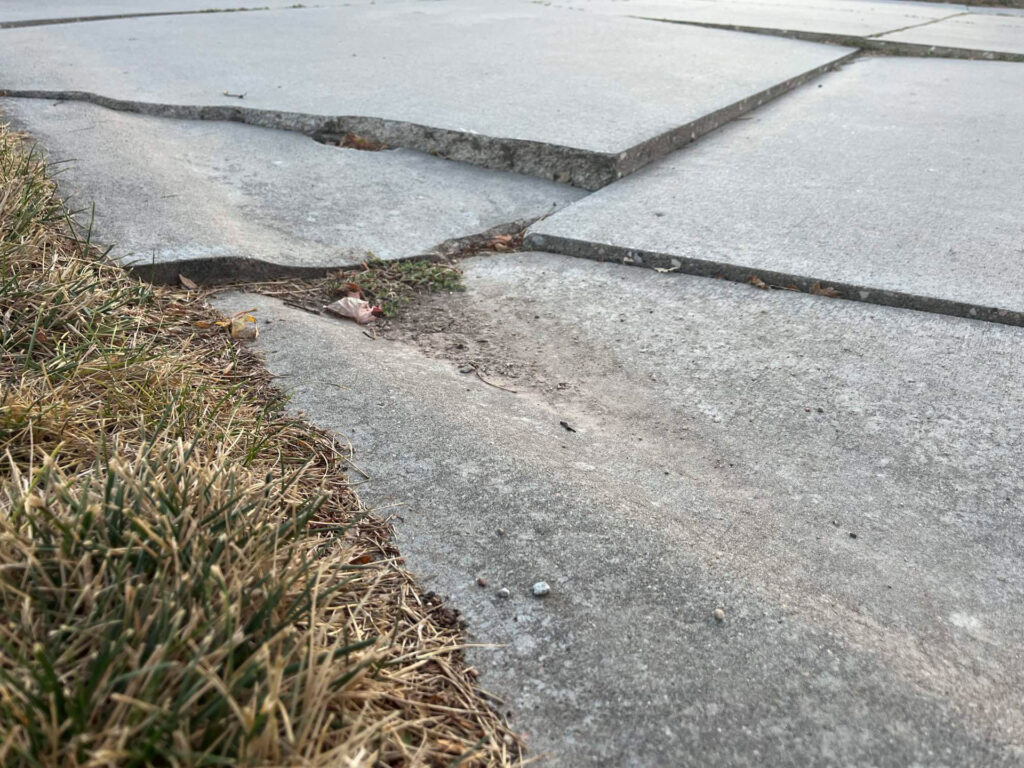
A walkway slab that has settled even a few inches, or front steps that have pulled away from the house, can create a serious safety hazard. These are common concrete damage signs that should not be ignored, especially in high-traffic areas around a home or business. Uneven concrete surfaces increase the risk of trips, falls, and injuries for family members, guests, customers, and delivery personnel.
Beyond safety concerns, damaged sidewalks and walkways can also create potential liability issues. Many communities require property owners to maintain the sidewalks adjacent to their homes or businesses. Addressing these concrete damage signs early can help improve safety, maintain curb appeal, and prevent more costly repairs in the future.
What causes it
- Erosion from rainwater and gutter runoff: concentrated water flow washes out the soil supporting walkway slabs.
- Rotted tree roots: a root that grew under the walkway and later decayed leaves a void the slab sinks into. Live roots can also lift slabs from below, creating raised edges.
- Uncompacted fill: dirt placed under the slab that was never compacted well settles unevenly.
- Settling steps and stoops: front steps are often poured on the loose backfill beside the foundation, so they sink, tilt, and separate from the house over time.
- Frost heave: freezing soil pushes slabs up unevenly in winter, and they don’t always return level in spring.
How to identify it
- A raised lip where one slab edge sits higher than the next (even a half inch can catch a toe)
- Steps that slope, rock, or feel uneven underfoot
- A stoop or staircase visibly pulling away or cracking off from the foundation
- Noticeable cracking and sloping across the walking surface
- Water pooling on the walkway where it used to drain
- Neighbors, mail carriers, or guests adjusting their stride at the same spot
Thumbs Up forIntegrity

Concrete Repair
Homeowner Reviews
your neighbors are talking about us…
DBS Repair has been lifting, leveling, and protecting
concrete in and around homes across Minnesota and Wisconsin,
from Duluth to Eau Claire, for nearly 15 years!
See what your neighbors have been saying about DBS Repair’s
concrete living, leveling, and void filling services.


Find Your Service Area
Enter your ZIP code to see which service page is right for your area.


