HOME INSULATION problems
Common Home Insulation Problems: Causes and Warning Signs
Heat always moves toward where it is depleted. In winter it flows from inside your home to the outside, and in summer it pushes its way back in. When a home is under-insulated or full of hidden air leaks, that constant heat flow turns into high utility bills, cold rooms, attic mold, ice dams, and even frozen pipes. With cold winters and warm summers, Minnesota and Wisconsin homes feel these problems more than most.
High Energy Bills & Heat Loss
What it is
If your heating and cooling systems run constantly to hold a comfortable temperature, your home is losing conditioned air faster than it should. Many homes leak the equivalent of an open window’s worth of air, even when every window is shut tight, so you keep paying to heat or cool air that escapes. More energy and money are lost through the attic than through any other part of the house.
What causes it
- Inadequate attic insulation: existing insulation in many homes is as thin as R-19, while the U.S. Department of Energy recommends R-49 to R-60 for this climate. That is like wearing a t-shirt in a snowstorm when your house needs a parka.
- The stack effect: warm air rises and escapes through dozens of cracks and openings in the attic. As it leaves, new cold air is pulled in from the basement, crawl space, and outside, only to be heated and lost again in a continuous cycle.
- Hidden air leaks: gaps form wherever one part of the house connects to another, around wires, pipes, recessed lights, attic hatches, and framing joints.
- Leaky, uninsulated ductwork: a furnace may heat air to 100 degrees or more and then send it through leaky sheet metal ducts in a 30 degree attic. Less heat reaches the rooms it was meant for, so the furnace runs longer.
- Connected systems: your home’s systems interact. When one underperforms, like a leaking duct run, it forces the others to work harder and waste more energy.
How to identify it
- Utility bills that climb every season or run noticeably higher than similar homes nearby
- A furnace or AC that cycles almost nonstop to hold the thermostat setting
- Big temperature swings between rooms or floors
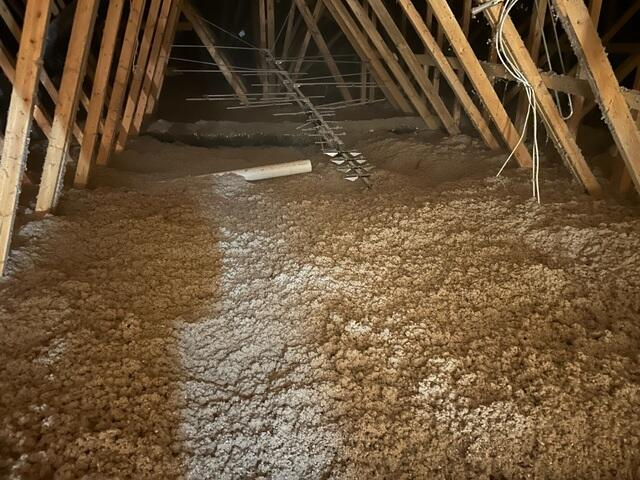
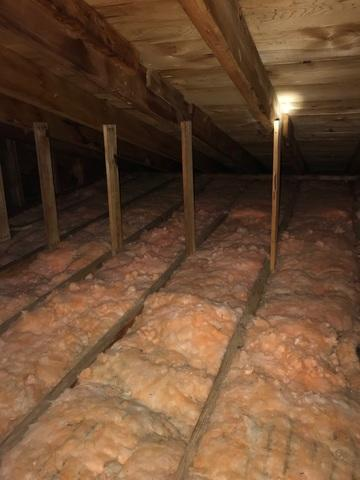
- Less than 16 inches of insulation visible on the attic floor (roughly the R-49 minimum)
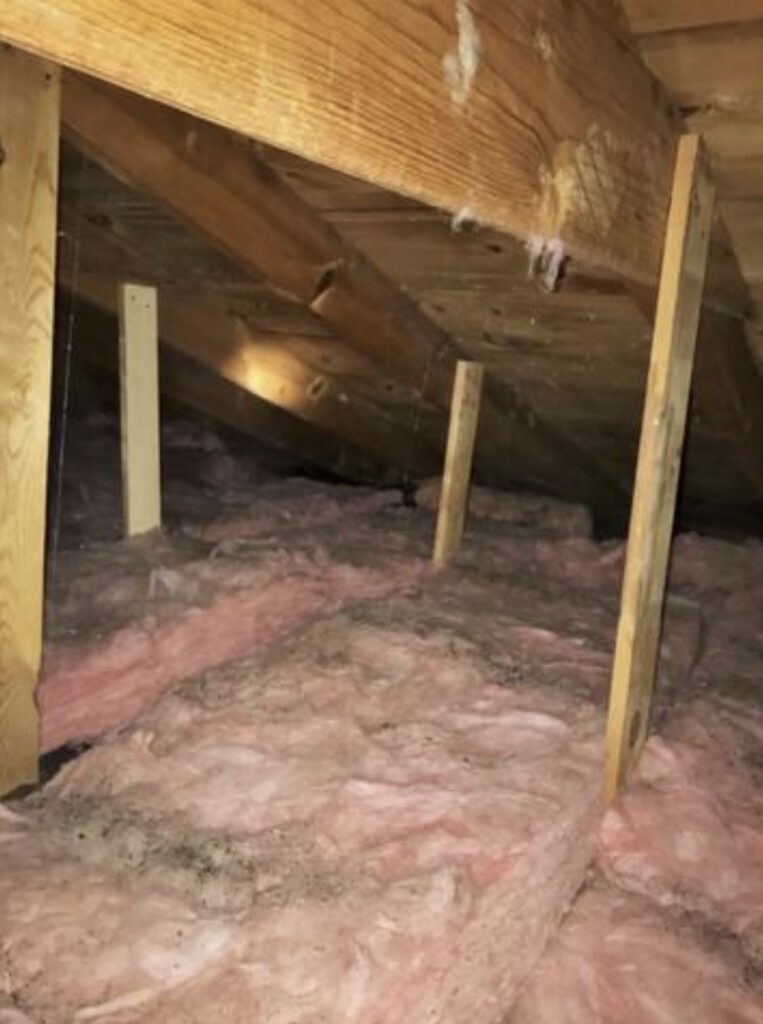
- Dirt-stained insulation in the attic, a clear sign it is filtering leaking air like a furnace filter
Cold Rooms or Drafty Areas in Winter
What it is
One bedroom that never warms up, a floor that is icy underfoot, or a draft you can feel near outlets and baseboards: these are all symptoms of air leakage and missing insulation in specific parts of the building envelope. The room is not the problem; the hidden paths that cold air takes to reach it are.
What causes it
- Air leaks at joints: a house is built from thousands of parts, and small gaps exist wherever they connect. Wood shrinks, materials expand and contract at different rates, and connections loosen over time, opening new leaks.
- Holes cut during construction: electricians, HVAC contractors, and plumbers drill and saw channels for wires, ducts, and pipes. The result is a network of leakage points that lets air out and in, including large openings around plumbing and cantilevered floors.
- The stack effect: as warm air escapes through the attic, replacement cold air is drawn in through the lowest leaks in the home, which is why drafts are felt at floor level.
- Uninsulated crawl spaces: a crawl space sits directly in the dirt and soaks up the natural cold of the earth, transferring it to the floors and rooms above.
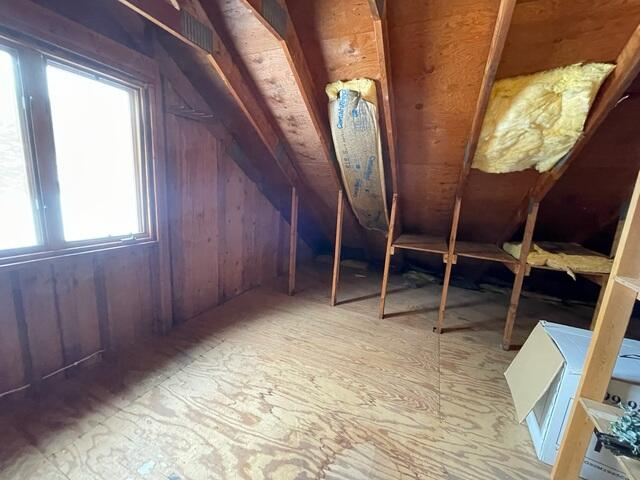
- Failed insulation: fiberglass batts in damp areas absorb moisture, sag, compress, and fall out of place, leaving sections of the home unprotected.
How to identify it
- One room or corner that is consistently colder than the rest of the house
- Floors above a crawl space that are unpleasantly cold all winter
- Drafts you can feel near outlets, baseboards, windows, or the attic hatch
- Heat that must run nearly all the time to keep certain rooms comfortable
- Fiberglass insulation that has fallen from between floor joists in the crawl space or basement

Hot Attic in Summer
What it is
Think of a car parked in the summer sun: radiant energy keeps building up inside until the seats are too hot to touch. An attic superheats the same way. Temperatures can climb to 120, 130, 140 degrees or higher, and all that trapped heat presses down into the living space below, making upstairs rooms uncomfortable and driving up cooling costs.
What causes it
- Radiant heat from the sun: solar energy beats on the roof all day and radiates into the attic, where it accumulates with nowhere to go.
- No reflective protection: without anything to reflect radiant heat back toward its source, the roof deck transfers it straight into the attic air.
- Inadequate insulation between attic and living space: thin insulation lets superheated attic air warm the ceilings and rooms below.
- Poor attic ventilation: hot air builds up faster than it can escape through soffit, ridge, or gable vents.
- Ductwork running through the attic: cooled air traveling through 130 degree space absorbs heat before it ever reaches your rooms, so the AC works harder and electricity use spikes.
How to identify it
- Upstairs rooms that stay hot well into the evening, even with the AC running
- An attic that feels like an oven the moment you open the hatch
- Electricity bills that spike sharply in summer months
- An air conditioner that runs continuously but never quite catches up
- Ceilings that feel warm to the touch on sunny afternoons
Poor Indoor Air Quality
What it is
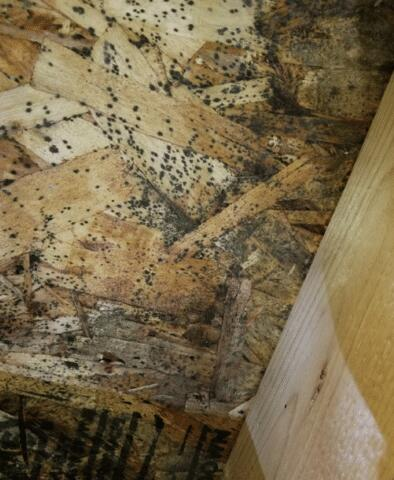
The air you breathe indoors does not all come from open doors and windows. In a leaky home, a large share of it is pulled in through the crawl space, basement, attic, and wall cavities. That means dust, humidity, mold spores, and musty odors from the dirtiest parts of the house circulate into the rooms where your family lives, and your home continuously pays to condition that unfiltered air.
What causes it
- The stack effect: as warm air escapes through the attic, replacement air is drawn up from the crawl space and basement, carrying whatever is down there, including moisture, mold spores, and odors, into the living space.
- Unsealed air leaks: outside air enters unfiltered through gaps around pipes, wires, rim joists, and framing instead of through any filtration.
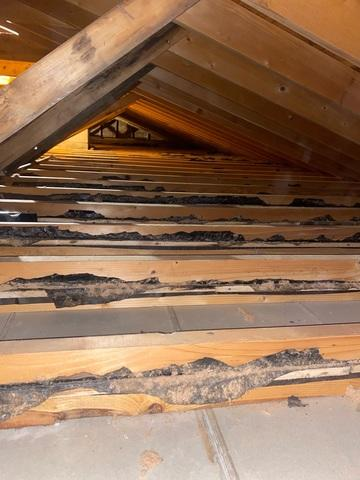
- Mold in the attic or crawl space: damp fiberglass and wet wood harbor mold whose airborne spores can reach the living space and pose possible health hazards.
- Vents exhausting indoors: bathroom and dryer vents that dump into the attic instead of outside add moisture to the house instead of removing it.
- Dirty insulation acting as a filter: leaking air passes through fiberglass insulation, which traps dirt and dust the way a furnace filter would, proof the air pathway exists.
How to identify it
- Musty or earthy smells, especially when the furnace or AC kicks on
- Allergy symptoms that improve when you leave the house
- Excess dust that returns quickly after cleaning
- Humidity that feels high in summer or air that feels stale year-round
- Dirt-stained insulation visible in the attic or crawl space
Attic Mold & Moisture Damage
What it is
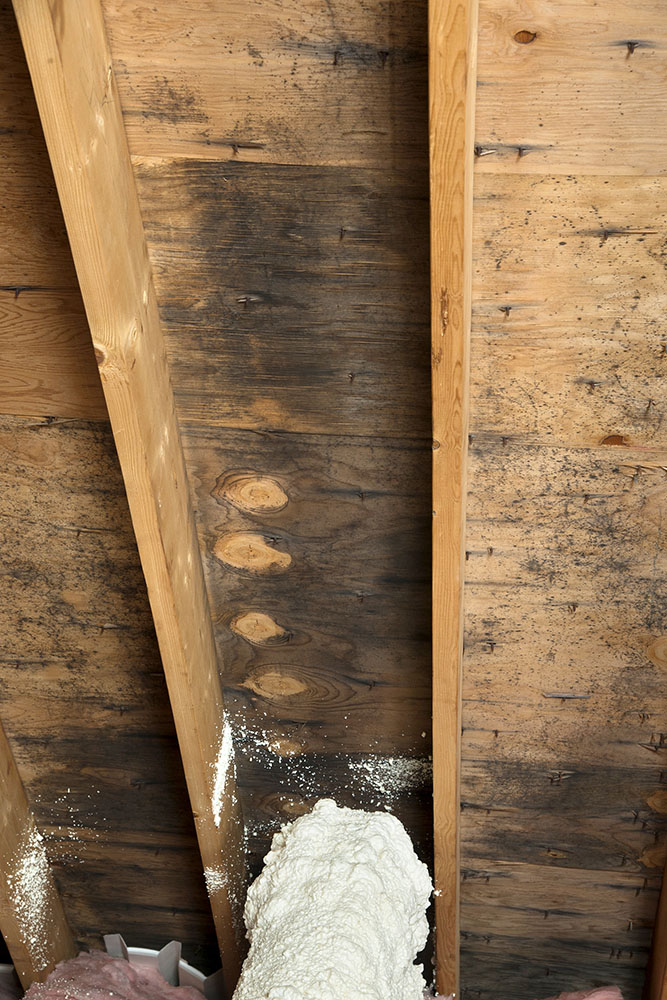
Mold in the attic is first and foremost a moisture problem. Warm, humid air escapes from the living space below, hits the cold underside of the roof deck, and condenses. Water then drips down the rafters and onto the attic floor and insulation. Wet wood and damp fiberglass are ideal environments for mold, which can weaken structural elements like rafters and roof sheathing through rot. Until the moisture source is found and fixed, the problem only gets worse.
What causes it
- Bathroom vent fans dumping into the attic: in most houses with attic mold, the bath fan exhausts moist air into the attic instead of outside. Every hot shower sends humidity straight up there.
- Dryer vents terminating in the attic: the same mistake with even more moisture, often visible as black staining on the roof decking directly above the vent.
- Air leaks from the living space: gaps around recessed light fixtures, heating vents, the attic access hatch, and other cracks let warm, humid indoor air escape into the cold attic.
- Poor attic ventilation: without adequate soffit, ridge, and gable vents, moisture that reaches the attic has no way out.
- Condensation on the cold roof deck: the moment humid air touches the cold sheathing, moisture condenses and soaks into the wood.
How to identify it
- Black or gray staining on the roof decking and rafters
- A damp or musty smell when you open the attic hatch
- Frost on the underside of the roof deck on cold mornings
- Water droplets on rafters or matted, damp insulation
- A bathroom or dryer duct visibly ending inside the attic
See the Hidden Benefits of Basement Insulation!
Frozen or Burst Pipes in Winter
What it is
When water lines run through unconditioned, under-insulated spaces, a deep Minnesota or Wisconsin cold snap can freeze the water inside them. Freezing water expands, and the pressure can split the pipe. The burst itself may go unnoticed until the thaw, when water pours into the crawl space, basement, or walls and causes extensive damage.
What causes it
- Pipes in cold crawl spaces: crawl spaces sit directly in the dirt and soak up the natural cold of the earth. Water heaters, hot water lines, and supply pipes located there are exposed to near-outdoor temperatures all winter.
- Failed or fallen insulation: fiberglass batts that absorb moisture get soggy, compress, lose R-value, and fall out of place, leaving pipe runs unprotected exactly where protection matters most.
- Cold air infiltration: vents, gaps, and air leaks at the rim joist and foundation let freezing outdoor air wash directly over plumbing.
- Pipes in exterior walls and unheated areas: lines routed through poorly insulated exterior walls, garages, or attics sit outside the home’s heated envelope.
How to identify it
- Faucets that slow to a trickle or stop entirely during cold snaps
- Frost or condensation visible on exposed pipes in the crawl space or basement
- Pipes that knock, bang, or whistle when temperatures drop
- A history of freeze-ups in the same fixture or pipe run each winter
- Noticeably cold floors above the crawl space, a sign the whole space is running cold
Ice Damming on Roof & Gutters
What it is
Ice damming occurs when heat from inside the attic warms the underside of the roof and melts the snow sitting on top. The meltwater runs down the roof until it reaches the cold overhang and gutters, where it refreezes into a ridge of ice and icicles. As the dam builds near the eave, melting snow and rainwater puddle behind it, and that trapped water can work underneath the shingles and leak into the attic, drywall, furniture, and flooring below.
What causes it
- Heat escaping into the attic: inadequate attic insulation lets the home’s heat rise through the roof deck and melt the snow above, even on freezing days.
- Air leaks from the living space: the same gaps that drive heat loss, around lights, hatches, ducts, and framing, feed warm air to the roof.
- Poor attic ventilation: without proper venting, warm air lingers under the roof deck instead of being carried away.
- Warm, leaky ducts in the attic: heated air running through leaky attic ductwork warms the roof from below.
- Clogged gutters: debris-filled gutters give meltwater nowhere to drain, accelerating the freeze-up at the eave.
How to identify it
- Thick icicles hanging from the eaves and frozen, overflowing gutters
- A ridge of ice building along the roof edge after snowfalls
- Icicles concentrated on one section or corner of the house, a sign that the room below is losing its heat straight through the roof
- Water spots or stains on ceilings, the mark of a roof leak behind the dam
- Snow that melts off your roof faster than your neighbors’ roofs (heat is escaping)
Home Insulation
Reviews
your neighbors are talking about us…
DBS Repair has been keeping attics, basements, crawl spaces, and walls warm in winter and cool in summer with home insulation across Minnesota and Wisconsin,
from Duluth to Eau Claire, for nearly 15 years!
See what your neighbors have been saying about DBS Repair’s
home insulation services.


Find Your Service Area
Enter your ZIP code to see which service page is right for your area.


